Notes/AI
The Last 10% Is Still the Whole Job
 Ted Kulakevich·6 min read·7 min listen·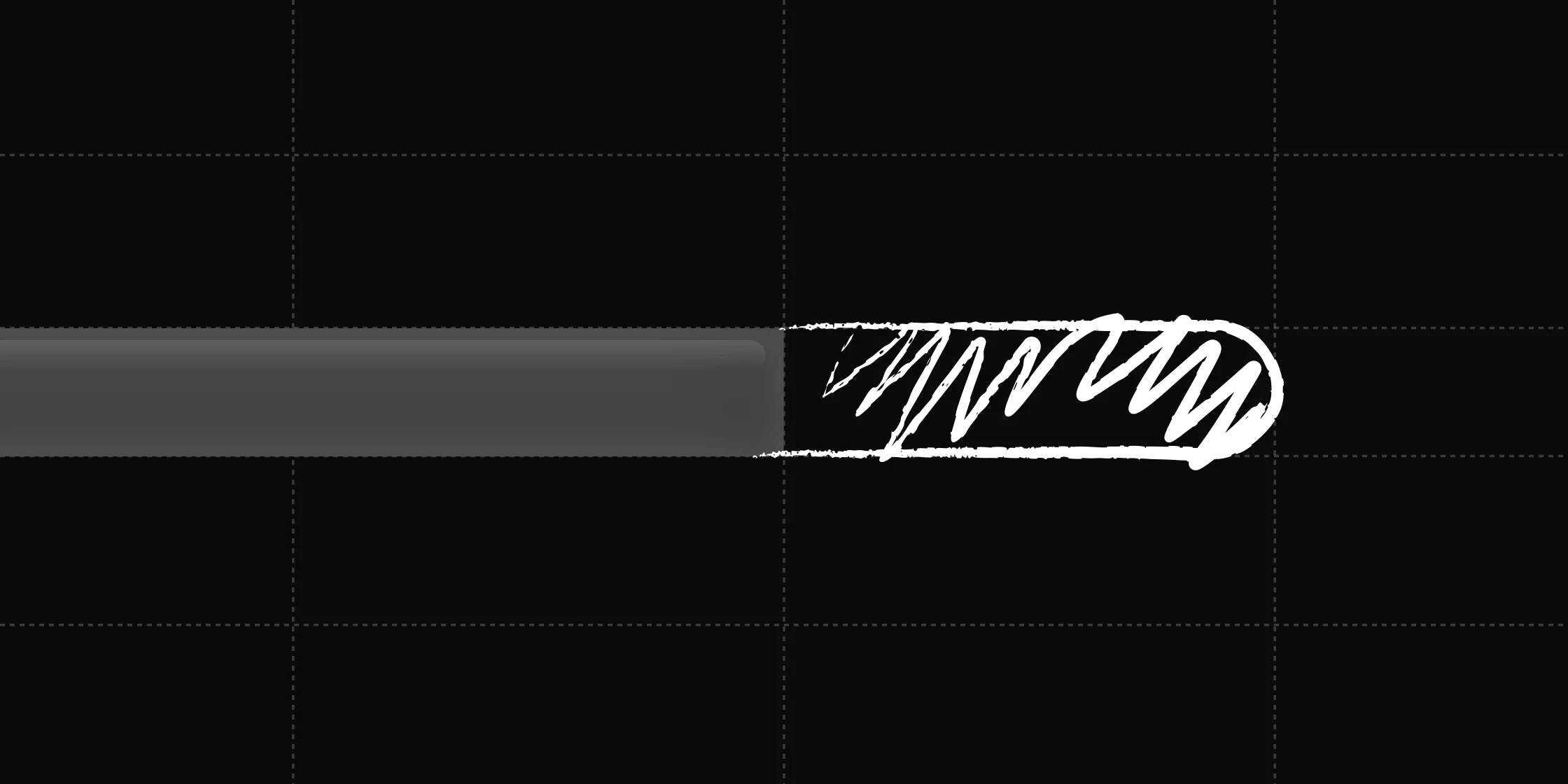
Listen to note
The essay, in Ted’s voice.
You can ship ten landing pages in a day now, but trust me, most of them are slop.
That's the part nobody puts in the demo video. The tooling got fast enough that output stopped being the constraint, and the moment output stopped being the constraint, a different problem walked in and sat down: I have to actually look at all of it. Every section, every line of copy, every hover state. The second I stop reviewing, quality falls off a cliff, and the work starts to look like what it is, which is a template a machine filled in.
So I've been trying to figure out what the real bottleneck is now, because it's definitely not intelligence.
The 90% feels like 100%
Here's the trap. AI gets you about ninety percent of the way to competent in a field you know nothing about, and that ninety percent feels enormous. It feels like power. You can talk about commercial insurance, or tax law, or typography, and sound like you belong in the room.
The problem is the ten percent you can't see. In your own domain you know exactly where the weak spots are. I can look at a landing page and tell you in four seconds that nobody thought about it, that it's a prompt and a template and a deploy. But put me in commercial insurance and I'd have no idea what I was missing. I'd ship the thing and feel great about it.
That missing ten percent isn't a rounding error. It's the part that decides whether the product works. And you can route around it for a surprisingly long time, which is the dangerous part, because it feels like you're making all the right moves right up until you hit a wall you can't get over without expertise you never built.
The bubble doesn't pop because AI gets worse
Everyone's arguing about whether we're in a bubble and whether it pops. I think the popping mechanism is being misdiagnosed. People are looking for a capability failure, some moment where the models plateau and the emperor turns out to be naked.
I think it's simpler and more human than that. The agents get good enough at automating enough of the work that people run out of the energy to push any single thing to quality. You stop reading the output. You start hitting continue. Not because you're lazy, but because there are eleven parallel things telling you they're done and you have one brain.
And then one of two things happens. Either the market notices and rejects it, in which case the people who still make things by hand suddenly have a very good decade. Or the slop becomes the new floor, everyone's expectations quietly reset, and the only way to compete is to build something meaningfully better than the average machine output. Which is harder than it sounds, because the average machine output isn't bad. It's just empty.
I don't know which one we get. I know that "more AI" isn't the answer to either.
The shortage is interfaces, not intelligence
When the labs start talking about slowing down, I don't hear caution. I hear people running low on ideas and getting nervous about who takes the blame when the market figures that out.
Because the frontier isn't where they say it is. We already have more intelligence available than any of us can actually absorb. I'm sitting on tools that can do a week of work in an afternoon, and the reason I'm not ten times more productive is not that the model isn't smart enough. It's that I have no good way to see what happened, review it, and steer it.
That's an interface problem. It's a design problem. It's the least glamorous and most valuable unsolved thing in this entire industry right now, and it's wide open, because everyone's busy racing on benchmarks.
I've been building tools for my own studio for this exact reason. Not because I want to be a software company, but because I got paralyzed. So much automation running that I couldn't form a sentence about the state of my own project. Not words anymore, just vibes. That's not a workflow, that's a symptom.
A human still has to feel the sweat
The optimistic version of the next few years is that everyone gets a staff. Your own project manager, your own engineer, your own researcher, and the administrative sludge that eats sixty percent of a design business just evaporates. You spend your day on the part you actually love.
I want to believe it. I'm not there yet, and my objection isn't technical.
AI doesn't have will. It doesn't want the thing to be good. You can automate an unlimited amount of process and you still need a person sitting in the chair who cares whether it works, who has the whole picture of the business in their head, who decides that this isn't right yet and we're doing it again. Until a system holds the full context of what you're building and actually wants an outcome, it's an extremely fast set of hands attached to nobody.
Brain power is still the scarce resource. It always was. It's just that now it's the only scarce resource, which makes it very obvious who has it.
Computers are for nerds
The last thing, and it's the one I keep coming back to.
We keep forgetting that most people don't want any of this. AI is a computer program, and most people put it in some other category in their heads, something mystical or threatening, and underneath that they simply don't care about computers. They think it's a nerd thing. They're not wrong.
I watch a demo where an agent plans the week's dinners, orders the groceries and has them on the doorstep, and I think: some people like the grocery run, myself included. Plenty of people would rather cook the dinner than have it handled. They like the work. They like the small suffering of doing a thing with their hands. That's not a market failure to be engineered away, that's the market.
Which is why I'm not trying to build something that removes the craft. I want the opposite. I want the tools to be good enough that designing feels like playing a game for a few hours a day, where the boring connective tissue disappears and the thing you were actually good at gets more room.
The machines got fast. Taste didn't get cheaper. That gap is the whole business now.
Who holds the last ten percent for you?
I run a design studio called KULAK, and this is basically the whole thesis of it.
We're not the studio that pretends AI doesn't exist. It does the grunt work, and it does it well. What we sell is the part after that. People who have been designing brands, websites, and products long enough to know exactly where the last ten percent hides, and who catch it before it ships to your customers instead of after.
That's why the work is set up as a subscription rather than a series of one-off projects. The ten percent isn't a stage at the end of a timeline. It's attention, applied continuously, by someone who knows your brand well enough to notice when something is off. You get a dedicated design manager who owns your account, a team of specialists behind them for brand, illustration, product, and development, and an update every twenty four to forty eight hours on average.
If you read all of this and found yourself nodding, you probably already know which parts of your own product are running on the ninety percent and hoping nobody notices.
We take on a small number of clients at a time, and the first step is always a conversation. If you have a project in mind and want to work together, book a call below.